bluename
 How to Identify Common Monstera Varieties: Key Features to Look For
1. Monstera deliciosa: The Classic “Split-Leaf” Monstera
Leaf Size: Mature leaves can grow up to 3 feet long and 2 feet wide—much larger than most other monstera varieties.
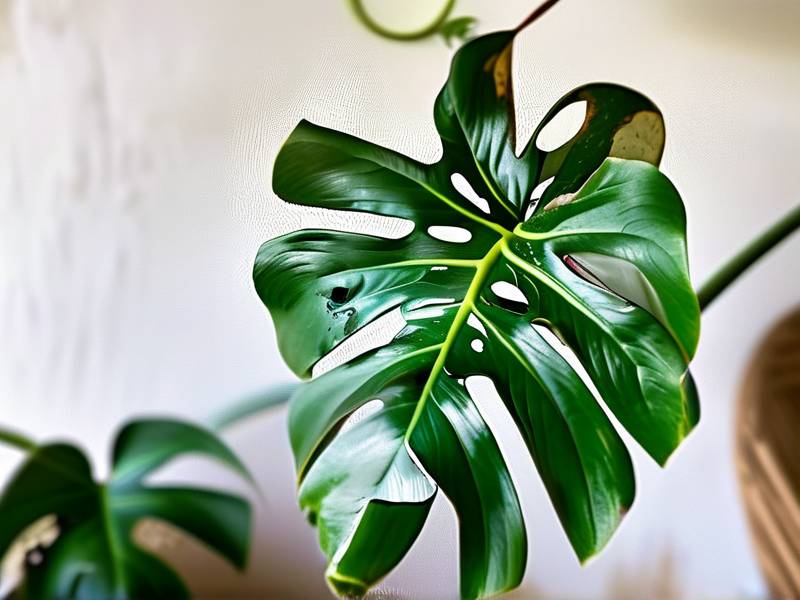
Leaf Shape: Young leaves are small, heart-shaped, and lack fenestrations. As they mature, they develop deep, finger-like splits (called “lobes”) along the edges, with some smaller holes near the midrib.
Fenestrations: Splits (not just holes) that extend from the edge of the leaf toward the midrib. Mature leaves often have 5-7 splits on each side.

Growth Habit: Climbing. In the wild, it uses aerial roots to climb trees, so indoors, it benefits from a moss pole or trellis to support its height.
Other Clues: The stems are thick and woody as the plant matures, and aerial roots are large and prominent. It’s also the only monstera that produces edible fruit (though the fruit is toxic until fully ripe—so don’t eat it unless you’re sure it’s ready!).
2. Monstera adansonii: The “Swiss Cheese Vine” (Porous-Leaf Favorite)
Leaf Size: Smaller than M. deliciosa—leaves grow 2-6 inches long and 1-4 inches wide.
Leaf Shape: Oblong or oval, with a pointed tip. The edges are smooth (no splits), but the surface is covered in small, round or oval holes.
Fenestrations: Multiple small holes (fenestrations) scattered across the leaf, from the midrib to the edges. The holes are usually evenly spaced and don’t touch the leaf edges.
Growth Habit: Trailing or climbing. It has thin, flexible stems that trail over the edges of pots, but it will also climb if given a support (like a small trellis).
Other Clues: The leaves are thick and leathery, and the stems are thin and green (not woody). It’s often sold in hanging baskets, labeled as “Monstera adansonii” or “Swiss cheese vine.”
3. Monstera obliqua: The Rare, Delicate Porous-Leaf Variety
Leaf Size: Even smaller than M. adansonii—leaves are 1-3 inches long and 0.5-2 inches wide.
Leaf Shape: Oblong or lance-shaped, with a very thin, delicate texture (unlike M. adansonii’s thick leaves).
Fenestrations: More holes than leaf tissue—this is the biggest clue! The holes are large, irregularly shaped, and often touch the leaf edges, making the leaf look lacy or “swiss cheese-like” but much more delicate.
Growth Habit: Trailing. Its stems are extremely thin and fragile, so it’s best kept in a hanging pot where it can trail without being disturbed.
Other Clues: The leaves are papery thin (you can almost see light through them), and the plant grows more slowly than M. adansonii. It’s rarely found in regular nurseries—you’ll usually need to buy it from specialty plant shops, labeled as “Monstera obliqua rare variety.”
4. Monstera minima (Rhaphidophora tetrasperma): The “Mini Monstera” (Less Porous)
Leaf Size: 4-8 inches long and 3-6 inches wide—bigger than M. adansonii but smaller than M. deliciosa.
Leaf Shape: Heart-shaped, with splits (not just holes) along the edges. Young leaves have few splits; mature leaves have 3-5 splits on each side.
Fenestrations: Splits that extend from the edge toward the midrib, similar to M. deliciosa, but with fewer and smaller splits. Some leaves may have small holes near the midrib, but they’re less prominent than the splits.
Growth Habit: Climbing. It has thin, flexible stems and aerial roots that cling to supports, so it needs a moss pole or trellis to grow upright.
Other Clues: The stems are green and thin (not woody), and the leaves are glossy and thick. It’s often labeled as “mini monstera” or “Rhaphidophora tetrasperma” (its correct scientific name).
5. Monstera standleyana: The “Variegated Monstera” (Less Porous)
Leaf Size: 3-6 inches long and 1-2 inches wide—long and narrow, unlike the heart-shaped leaves of other monsteras.
Leaf Shape: Lance-shaped (long and pointed at both ends) with smooth edges. No splits—only small, occasional holes near the midrib (if any).
Fenestrations: Very few or no holes. Most leaves are solid green with variegation, with no fenestrations at all.
Growth Habit: Climbing or trailing. It has thin stems that can climb with support or trail in a hanging pot.
Other Clues: The variegation is the key—leaves have irregular stripes or spots of white, cream, or yellow. It’s often labeled as “variegated monstera standleyana” or “five holes plant” (though it rarely has five holes!).
6. Monstera dubia: The “Shingle Plant” (Less Porous)
Leaf Size: Young leaves are small (1-2 inches long) and heart-shaped; mature leaves grow up to 6 inches long but stay narrow.
Leaf Shape: Young leaves are round and flat, with no fenestrations. As they mature, they become longer and develop small holes near the midrib, but the edges stay smooth.
Fenestrations: Few, small holes near the midrib—much less porous than M. adansonii.
Growth Habit: Climbing (shingling). It attaches its leaves directly to surfaces (like a moss pole or wall) using tiny roots on the leaf undersides, so it grows flat against the surface.
Other Clues: The leaves are glossy and dark green, and the plant grows slowly. It’s often labeled as “Monstera dubia shingle plant.”
Key Care Differences: Porous-Leaf vs. Less-Porous-Leaf Monsteras
1. Watering: Porous-Leaf Monsteras Need More Frequent Watering
Porous-Leaf Varieties (M. adansonii, M. obliqua): Need more frequent watering. Check the soil every 3-5 days—when the top 1 inch of soil is dry, water thoroughly. Because they’re often trailing and in hanging pots (which dry out faster), you may need to water them once a week, especially in warm, dry weather.
Pro Tip: Use a well-draining soil mix (potting soil + perlite + orchid bark, 1:1:1) to prevent waterlogging, but don’t let the soil dry out completely—their thin roots are more sensitive to drought.
Less-Porous-Leaf Varieties (M. deliciosa, M. minima, M. standleyana): Need less frequent watering. Check the soil every 5-7 days—water when the top 1-2 inches of soil are dry. Their thicker leaves hold moisture better, so they can go longer between waterings.
Pro Tip: For M. deliciosa (a large climbing variety), use a heavier pot (like terracotta) to prevent tipping, and water until it drains out the bottom—its thick roots need deep hydration but hate sitting in water.
2. Humidity: Porous-Leaf Monsteras Crave Higher Humidity
Porous-Leaf Varieties (M. adansonii, M. obliqua): Need humidity levels between 60-80%. If humidity is too low (below 50%), their leaves may develop brown edges, curl, or drop. To boost humidity:
Use a room humidifier (look for “humidifiers for trailing monsteras” to find a compact option for hanging pots).
Place the hanging pot near other plants (grouping plants increases humidity).
Mist the leaves once a day (in the morning, so they dry by night) with room-temperature water.
Less-Porous-Leaf Varieties (M. deliciosa, M. minima, M. standleyana): Tolerate lower humidity—40-60% is ideal. They can handle average indoor humidity (which is often 30-50%) but will grow better with a little extra moisture. To boost humidity:
Place a tray of water and pebbles under the pot (make sure the pot doesn’t sit in water).
Mist the leaves once a week (no need for daily misting).
For M. deliciosa, wipe the large leaves with a damp cloth every 2-3 weeks—this removes dust and adds a little moisture.
3. Light: Both Need Bright, Indirect Light—but Porous Varieties Are More Sensitive to Sunburn
Porous-Leaf Varieties (M. adansonii, M. obliqua): Need bright, filtered light—avoid direct sun at all costs. Their thin leaves burn easily, leading to brown spots or crispy edges. Place them near a north or east-facing window with a sheer curtain, or 2-3 feet away from a west or south-facing window.
Pro Tip: If you’re growing M. obliqua (the delicate one), avoid placing it near windows with strong afternoon sun—it’s even more sensitive than M. adansonii.
Less-Porous-Leaf Varieties (M. deliciosa, M. minima, M. standleyana): Can handle a little more light—they still need indirect light, but they’re more tolerant of morning sun (from east-facing windows) or filtered afternoon sun. Mature M. deliciosa plants, for example, can handle 1-2 hours of morning sun, which helps them develop larger leaves and more splits.
Pro Tip: For M. minima (mini monstera), place it near a bright window with a sheer curtain—too little light will make it leggy, while too much direct sun will burn its leaves.
4. Support and Pruning: Climbing vs. Trailing Habits (Tied to Porosity)
Porous-Leaf Varieties (M. adansonii, M. obliqua): Trailing (or weak climbers). They look best in hanging pots, where their stems can trail over the edges. If you want them to climb, use a small trellis or moss pole, but don’t expect them to grow as tall as M. deliciosa. Prune them to control length—snip off long stems just above a leaf node to encourage bushier growth.
Pro Tip: M. obliqua has fragile stems, so prune gently with clean, sharp scissors to avoid breaking them.
Less-Porous-Leaf Varieties (M. deliciosa, M. minima, M. standleyana): Climbing. They need support (moss pole, trellis, or wall) to grow upright. Without support, they’ll trail, but their stems may become heavy and break. Prune them to control height and shape—trim off dead or yellow leaves, and cut back overgrown stems to encourage new growth. For M. deliciosa, prune aerial roots if they get too unruly (but leave some—they help the plant climb).
Pro Tip: M. minima (mini monstera) grows quickly, so you may need to prune it every 2-3 months to keep it compact.
5. Repotting: Frequency Depends on Growth Rate (Porous Varieties Grow Faster)
Porous-Leaf Varieties (M. adansonii, M. obliqua):
M. adansonii: Grows quickly, so repot every 12-18 months. Look for signs like roots growing out of drainage holes or the plant becoming top-heavy in its current pot. Choose a pot 2 inches larger in diameter than the current one—hanging pots work best, so opt for lightweight plastic or woven baskets (to avoid straining ceiling hooks). Use fresh, well-draining soil (potting soil + perlite + orchid bark, 1:1:1) to keep roots healthy.
M. obliqua: Grows slowly, so repot only every 2-3 years. Its fragile roots are easily damaged, so be extra gentle when removing it from the old pot. Use a small pot (only 1-1.5 inches larger than the current one) to prevent excess soil from holding moisture—terracotta is a good choice here because it dries out soil evenly, reducing the risk of root rot. Avoid disturbing the roots more than necessary; if the plant isn’t root-bound, just refresh the top layer of soil instead of full repotting.
Less-Porous-Leaf Varieties (M. deliciosa, M. minima, M. standleyana):
M. deliciosa: Grows moderately—repot every 18-24 months. As a large climbing plant, it needs a sturdy pot (terracotta or ceramic) to support its weight. Choose a pot 3 inches larger in diameter than the current one to give its thick roots room to spread. If you’re using a moss pole, adjust it during repotting to ensure it’s secure—this helps the plant climb and develop larger leaves.
M. minima: Grows quickly (faster than M. deliciosa), so repot every 12-18 months. Use a pot 2 inches larger in diameter, and keep it lightweight if you’re using a trellis. Its thin roots don’t need as much space as M. deliciosa’s, so avoid oversized pots that trap moisture.
M. standleyana: Grows slowly, so repot every 2-3 years. It tolerates being slightly root-bound, so only repot when you see roots coming out of the drainage holes. Use a pot 1.5-2 inches larger in diameter, and choose a well-draining soil mix to prevent waterlogging—its less-porous leaves mean it’s more susceptible to overwatering if soil stays wet.
6. Fertilizing: Adjust Nutrient Needs Based on Growth Rate and Porosity
Porous-Leaf Varieties:
M. adansonii: Feed every 4-6 weeks during spring and summer (growing season) with a balanced, liquid fertilizer (diluted to half strength). Look for “liquid fertilizer for trailing monsteras” to ensure it’s gentle enough for its thin roots. Stop fertilizing in fall and winter when growth slows.
M. obliqua: Feed every 8-10 weeks during spring and summer—its slow growth means it doesn’t need as many nutrients. Use a diluted, mild fertilizer (like a fish emulsion or organic houseplant fertilizer) to avoid burning its delicate roots. Skip fertilizing entirely in winter.
Less-Porous-Leaf Varieties:
M. deliciosa: Needs more nutrients to support its large leaves—feed every 3-4 weeks during spring and summer with a balanced fertilizer (10-10-10 or 20-20-20). You can also add a slow-release fertilizer to the soil during repotting for steady nutrient release. Reduce to every 6-8 weeks in fall, and stop in winter.
M. minima: Grows quickly, so feed every 4-6 weeks during spring and summer with a diluted liquid fertilizer. Avoid overfertilizing—too much nitrogen can cause leggy growth instead of full, bushy foliage.
M. standleyana: Feed every 6-8 weeks during spring and summer. Its variegated leaves have less chlorophyll (the pigment that helps with photosynthesis), so it’s more sensitive to fertilizer burn—always dilute to half strength.
How to Choose the Right Monstera Variety for Your Space and Skill Level
1. Space:
Large Spaces (Living Rooms, Entryways): Choose M. deliciosa—it grows tall and wide, making it a statement piece.
Small Spaces (Apartments, Shelves): Go for M. minima (mini monstera) or M. adansonii—they stay smaller and work well on shelves or in hanging pots.
Vertical Gardens or Walls: M. dubia (shingle plant) is ideal—it grows flat against surfaces, adding greenery without taking up floor space.
2. Skill Level:
Beginners: M. adansonii or M. minima are easy to care for—they’re forgiving of minor mistakes (like occasional underwatering) and grow quickly, so you’ll see results fast.
Intermediate: M. deliciosa needs a bit more care (support, larger pots, regular pruning) but is still manageable for those with basic houseplant experience.
Advanced: M. obliqua is for experienced plant parents—it’s delicate, slow-growing, and needs precise humidity and watering to thrive.
3. Aesthetic Preference:
Bold, Dramatic Leaves: M. deliciosa’s large split leaves are perfect.
Delicate, Trailing Vines: M. adansonii or M. obliqua (for a rare look) work well.
Variegated Foliage: M. standleyana adds color with its white or yellow striped leaves.
Unique Growth Habit: M. dubia’s shingling growth is a conversation starter.
Final Tips for Success with Any Monstera Variety
Observe Your Plant: Every monstera is unique—pay attention to how it responds to light, water, and humidity. If leaves start to yellow or curl, adjust your care routine (e.g., water less, increase humidity).
Avoid Overwatering: This is the #1 killer of all monsteras. Always check soil moisture before watering, and ensure pots have drainage holes.
Provide Proper Light: Even shade-tolerant varieties need bright, indirect light to grow and develop fenestrations. If your space is dark, use a grow light.
Be Patient: Slow-growing varieties (like M. obliqua or M. dubia) take time to show growth—don’t rush to repot or fertilize more often than recommended.