bluename
 How to Get Rid of Fungus Gnat Larvae in Rhapis Multifida Palm Soil
If you've noticed tiny black flies hovering around your Rhapis multifida palm and its leaves are starting to yellow, you're likely dealing with a fungus gnat larvae infestation in the soil. I've been there—twice, actually. The first time, I lost a beautiful five-year-old palm because I didn't act fast enough. The second time, I caught it early and used a combination of methods that cleared the larvae within two weeks. In this guide, I'll walk you through exactly what I did, step by step, so you can save your palm without the guesswork.
Why Rhapis Multifida Palms Are So Vulnerable to Fungus Gnats
Rhapis multifida, also known as the broadleaf lady palm, is a slow-growing, clump-forming palm native to southern China. It's a popular houseplant because it tolerates lower light than many other palms and looks elegant in almost any room.
But here's the catch: this palm likes consistently moist soil. Not soggy, but evenly damp. And that's exactly the environment fungus gnats love.
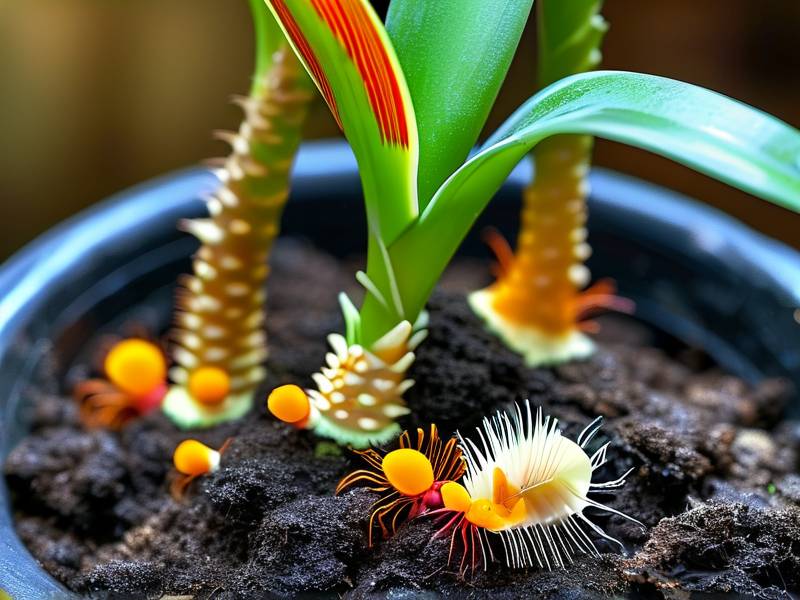
Fungus gnat adults lay eggs in moist, organic-rich soil. The larvae that hatch are tiny, clear-to-white, and they feed on fungi, algae, and decaying organic matter in the potting mix. Unfortunately, they also nibble on tender root hairs, which stresses the palm and opens the door to root rot.
The good news? You can break the cycle without harsh chemicals. I'll show you how.
What I Tried First (And What Actually Worked)
When I first spotted the gnats, I did what most people do: I bought a sticky trap. That caught the adults, sure, but the larvae kept hatching. The infestation didn't slow down at all.
Then I tried letting the top inch of soil dry out. That helped a little, but Rhapis multifida doesn't like drying out completely, so I had to be careful.
What finally worked was a three-part approach:
- Bottom watering to keep the soil surface dry.
- A biological larvicide (I used mosquito dunks containing Bti).
- Repotting with fresh, well-draining soil after two weeks.
Within 14 days, the gnats were gone. My palm pushed out a new frond about a month later, which told me the roots had recovered.
Let me break down each step so you can replicate it.
Step 1: Confirm You Actually Have Fungus Gnats
Not every tiny fly around your plant is a fungus gnat. Fungus gnats are weak fliers. They tend to run across the soil surface rather than fly away when you disturb the pot. They're also attracted to light and moisture.
If you tap the pot and a cloud of tiny dark flies rises, that's a strong sign. To confirm larvae, poke around the top inch of soil with a chopstick. You'll see tiny, translucent, worm-like creatures with shiny black heads. That's them.
Fungus gnats are mostly a nuisance to humans, but the larvae can damage young roots and stress the plant over time. The RHS notes that fungus gnats thrive in consistently moist, peat-based composts—exactly what many of us use for palms.
Step 2: Break the Life Cycle with Bottom Watering
Fungus gnat larvae need moist soil to survive. If you keep the top 1–2 inches of soil dry, you starve them.
But you can't just stop watering your Rhapis multifida. That palm will sulk and drop leaves.
So here's what I do: I set the pot in a shallow tray of water for 20–30 minutes. The soil wicks moisture up from the bottom. The top stays dry. The roots get what they need.
I did this every time the top inch felt dry for two weeks straight. The larvae population dropped dramatically because the surface wasn't hospitable anymore.
Pro tip: Don't leave the pot sitting in water for hours. That's how you get root rot. Empty the tray after 30 minutes.
Step 3: Use Bti (Mosquito Dunks) to Kill the Larvae
Bti stands for Bacillus thuringiensis israelensis. It's a naturally occurring bacterium that kills fungus gnat larvae but is harmless to people, pets, and beneficial insects.
I bought a pack of mosquito dunks, broke one into quarters, and dropped a quarter into a gallon of water. I let it soak overnight, then used that water for bottom watering.
Within three days, I noticed fewer gnats. By day ten, almost none.
Bti works because the larvae eat it, and it destroys their gut. It doesn't kill eggs, though, so you need to keep applying it for at least two weeks to catch newly hatched larvae.
The AHS recommends integrated pest management strategies like this for indoor plants, especially when you want to avoid synthetic pesticides.
Step 4: Repot with Fresh, Well-Draining Soil
After two weeks of bottom watering and Bti, I repotted my palm. This wasn't strictly necessary, but I wanted to remove any remaining larvae and their food source.
I used a mix of:
- 2 parts high-quality potting soil
- 1 part perlite
- 1 part orchid bark
This blend drains fast but holds enough moisture for the palm. It also has less peat, which fungus gnats love.
When I repotted, I gently shook off as much old soil as possible. I rinsed the roots with room-temperature water. Then I potted it into a clean container with fresh mix.
I also sterilized the old pot with a diluted bleach solution (1 part bleach to 9 parts water) and let it dry completely before reusing it.
Step 5: Add a Dry Topdressing
Even after repotting, I wanted extra insurance. So I added a half-inch layer of coarse sand or fine gravel on top of the soil.
This creates a dry barrier. Adult gnats can't lay eggs in it. Larvae can't crawl through it easily.
You can also use cinnamon, which has natural antifungal properties. I've tried both. Sand works better for long-term prevention.
What About Sticky Traps?
Sticky traps are great for monitoring. They catch adults, which helps you gauge how bad the infestation is. But they won't solve the problem alone.
I hang yellow sticky traps near the pot. When I see fewer adults on the traps, I know the larvae are dying off.
The 2-Week Timeline I Followed
Here's exactly what I did, day by day:
- Day 1: Confirmed larvae. Stopped top watering. Started bottom watering.
- Day 2: Made Bti water. Used it for bottom watering.
- Day 3–7: Bottom watered with Bti water every other day. Kept topsoil dry.
- Day 8–10: Noticed fewer adults. Larvae still present but fewer.
- Day 11–13: Continued Bti. Added sticky traps.
- Day 14: Repotted with fresh soil. Added sand topdressing.
- Day 15–21: No gnats. Palm showed no new yellowing.
By week three, the infestation was gone.
Three Mistakes I Made (So You Don't Have To)
1. I overwatered from the top. I thought more water would flush out the larvae. It just made the soil wetter and gave them a bigger breeding ground. Bottom watering is the way.
2. I waited too long to repot. I tried to avoid the hassle. But old soil holds eggs and organic matter. Fresh soil gives you a clean slate.
3. I used a pot without drainage holes. My first Rhapis multifida was in a decorative pot with no holes. Water pooled at the bottom. That's a fungus gnat paradise and a root rot disaster. Always use a pot with drainage.
How to Prevent Fungus Gnats from Coming Back
Once you've cleared the infestation, you don't want a round two. Here's what I do now:
- Bottom water most of the time. I top water maybe once a month to flush salts.
- Use a well-draining mix. Perlite and bark are your friends.
- Don't overpot. A pot that's too big holds too much moisture. Rhapis multifida likes to be slightly root-bound.
- Let the top inch dry between waterings. Not bone dry, but not soggy.
- Quarantine new plants. I keep new plants in a separate room for two weeks before introducing them to my collection.
- Refresh the topdressing every few months. Sand breaks down over time.
A Note on "90% of Indoor Plants Die from Overwatering"
You've probably heard this stat. It's not scientific, but it's directionally true. Most houseplant problems—yellow leaves, root rot, fungus gnats—start with too much water.
Rhapis multifida is more forgiving than some palms, but it's not a swamp plant. It wants moisture, not mud.
If you're unsure whether to water, stick your finger in the soil. If it's damp an inch down, wait. If it's dry, water.
When to Use Insecticides (And When Not To)
I avoid chemical insecticides indoors. They can harm beneficial insects, and some are toxic to pets. Bti is my go-to because it's targeted and safe.
If you have a severe infestation and Bti isn't cutting it, you can try a product containing Steinernema feltiae nematodes. These are microscopic worms that hunt fungus gnat larvae. They're safe for plants, people, and pets.
I've used them once, and they worked well. You mix them with water and drench the soil. Just follow the package directions.
Frequently Asked Questions
How long does it take to get rid of fungus gnat larvae?
With consistent bottom watering and Bti, you'll see a big drop in 7–10 days. Full eradication usually takes 2–3 weeks because you need to break the egg-laying cycle.
Can fungus gnats kill my Rhapis multifida palm?
Healthy, mature palms usually survive. But heavy larval feeding on young roots can stunt growth, cause yellowing, and lead to secondary infections like root rot. Don't ignore them.
Do I need to throw away the old soil?
Not necessarily. You can sterilize it by baking it in the oven at 180°F (82°C) for 30 minutes. But honestly, fresh soil is easier and smells better. I compost my old soil and use it outdoors.
Will hydrogen peroxide kill fungus gnat larvae?
A diluted hydrogen peroxide solution (1 part 3% peroxide to 4 parts water) can kill larvae on contact. But it also kills beneficial microbes. I tried it once. It worked okay, but Bti was more effective and less disruptive.
Why do fungus gnats keep coming back?
Because you're not breaking the life cycle. Adults live about a week. Eggs hatch in 3–6 days. If you only kill adults, new larvae emerge. You have to target larvae and keep the soil surface dry.
Final Thoughts
Fungus gnats are annoying, but they're not invincible. I've cleared them from my Rhapis multifida twice now using the same method: bottom watering, Bti, and a fresh repot.
The key is consistency. You can't skip a day of bottom watering and expect results. You can't repot and then go back to soaking the soil.
Stick with it for two weeks. Keep the topsoil dry. Use Bti water. Add a sand topdressing. Your palm will thank you with new growth and healthy roots.
And if you catch yourself reaching for the watering can every other day, remember: 90% of indoor plants die from overwatering. Your Rhapis multifida wants a drink, not a flood.