bluename
 How to Identify Pennywort Varieties: Care Differences Between Large-Leaf and Small-Leaf Types
First: What Is a Pennywort?
Common Pennywort Varieties: Identification Guide
Group 1: Large-Leaf Pennywort Varieties
1. Brazilian Pennywort (Hydrocotyle leucocephala – Also Called “Water Pennywort” or “Large-Leaf Pennywort”)
Key Identification Features
Leaves: Round to slightly heart-shaped, bright green, and 2–3 inches in diameter. The edges of the leaves are smooth, and the surface is glossy, with visible veins radiating from the center (like a spiderweb).
Growth Habit: Clumping or upright. When grown in soil, it forms a dense, bushy mound; when grown in water (hydroponic or aquatic), it can grow upright or float, with stems reaching 6–12 inches tall.
Stems: Thick, fleshy, and green, with nodes where new leaves and roots grow. If the stems get too tall, they may lean over, but they rarely trail far.
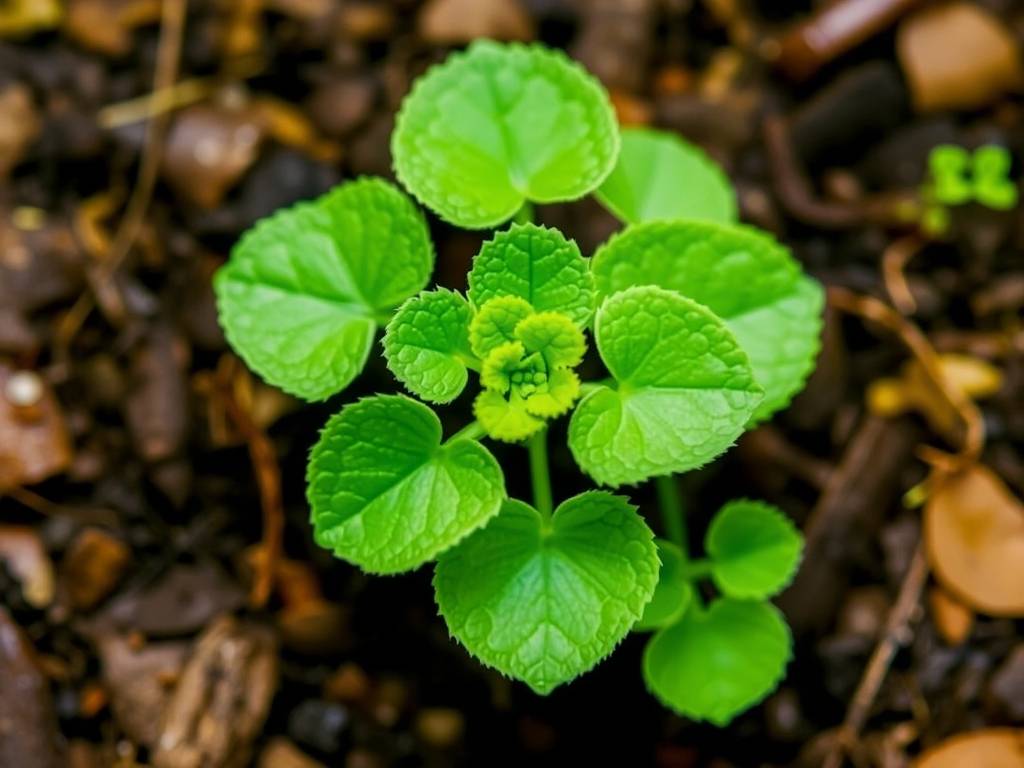
Unique Trait: It produces small, white, fluffy flowers in summer (when grown outdoors or in bright indoor light), though indoor plants rarely bloom.
How to Tell It Apart from Other Varieties
2. Shield Pennywort (Hydrocotyle bonariensis – Also Called “Shield-Leaf Pennywort”)
Key Identification Features
Leaves: Oval to shield-shaped, 3–4 inches in diameter (larger than Brazilian pennywort), with a small notch at the base (where the stem attaches). The leaves are dark green, thick, and leathery, with a less glossy surface than Brazilian pennywort.
Growth Habit: Low-growing and spreading. It doesn’t grow upright like Brazilian pennywort; instead, it creeps along the soil surface, forming a dense mat. Stems are short (2–4 inches long) and root easily where they touch the soil.
Unique Trait: It’s more tolerant of dry soil than other pennywort varieties—though it still prefers moisture, it can handle short periods of dryness without wilting.
How to Tell It Apart from Other Varieties
Group 2: Small-Leaf Pennywort Varieties
1. Dwarf Pennywort (Hydrocotyle sibthorpioides – Also Called “Small-Leaf Pennywort” or “Lawn Pennywort”)
Key Identification Features
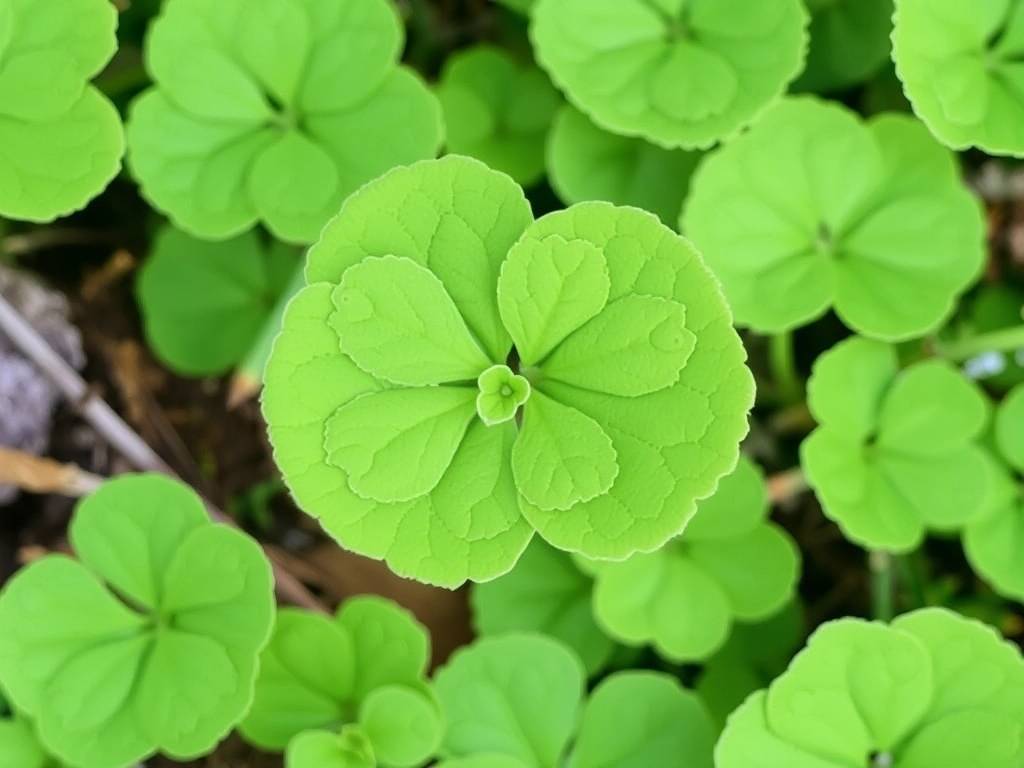
Leaves: Tiny, round, 0.5–1 inch in diameter, with a bright green color and smooth edges. The leaves grow in dense clusters along thin, wiry stems.
Growth Habit: Trailing or creeping. Stems can grow up to 2–3 feet long, trailing over the edges of hanging baskets or spreading along the soil surface. They root easily where they touch the soil, forming a dense mat.
Stems: Thin, green, and flexible—much more delicate than the thick stems of large-leaf varieties.
Unique Trait: It’s a fast grower—under the right conditions, it can fill a hanging basket in just a few months.
How to Tell It Apart from Other Varieties
2. Ivy-Leaf Pennywort (Hydrocotyle heteromeria – Also Called “Lobed-Leaf Pennywort”)
Key Identification Features
Leaves: Small, 1–1.5 inches in diameter, with 3–5 shallow lobes (like a tiny ivy leaf). The leaves are dark green, with a slightly fuzzy surface (unlike the smooth leaves of dwarf pennywort).
Growth Habit: Trailing but compact. Stems grow 1–2 feet long, but they’re thicker than dwarf pennywort’s stems, so the plant doesn’t spread as aggressively.
Unique Trait: It’s tolerant of lower light than other pennywort varieties—though it still needs bright indirect light, it can handle short periods of partial shade.
How to Tell It Apart from Other Varieties
Care Differences Between Large-Leaf and Small-Leaf Pennyworts
1. Light Needs: Large-Leaf vs. Small-Leaf
Large-Leaf Pennyworts (Brazilian, Shield)
Ideal Light: Bright, indirect light to 2–3 hours of direct morning sun. Brazilian pennywort can even tolerate full morning sun (east-facing windows) without leaf scorching, as its thick leaves are more resistant to sun damage.
Avoid: Harsh midday sun (12–3 PM), especially in summer—this can cause leaf edges to turn brown. Shield pennywort is more tolerant of direct sun than Brazilian pennywort, but it still benefits from shade during the hottest part of the day.
Low-Light Note: If kept in too little light, large-leaf pennyworts will become leggy (stems stretch) and leaves will turn pale. Use a LED grow light (12–14 hours a day) if your home is low on natural light.
Small-Leaf Pennyworts (Dwarf, Ivy-Leaf)
Ideal Light: Bright, indirect light (no direct sun). A spot near an east-facing window with a sheer curtain or a few feet away from a south-facing window works best. Their delicate leaves are prone to sunburn—even 1 hour of direct midday sun can cause brown spots.
Avoid: Direct sun (especially afternoon sun) and dark corners. Too little light will make dwarf pennywort’s stems stretch excessively, and ivy-leaf pennywort’s leaves will lose their dark green color.
Low-Light Note: Ivy-leaf pennywort can handle slightly lower light than dwarf pennywort, but both will benefit from a grow light in dim spaces.
2. Watering Needs: Large-Leaf vs. Small-Leaf
Large-Leaf Pennyworts (Brazilian, Shield)
Soil-Grown: Water when the top 1–2 inches of soil feel dry. Brazilian pennywort needs more frequent watering (every 3–4 days in summer) than shield pennywort (every 5–7 days), as shield pennywort is more drought-tolerant.
Hydroponic: Keep 2/3 of the roots submerged. Change water every 7–10 days—Brazilian pennywort is more sensitive to stagnant water than shield pennywort, so check for algae regularly.
Key Tip: Avoid overwatering—large-leaf pennyworts are prone to root rot if soil stays soggy. Make sure pots have drainage holes.
Small-Leaf Pennyworts (Dwarf, Ivy-Leaf)
Soil-Grown: Keep soil consistently moist—never let the top 1 inch dry out. Water every 2–3 days in summer, as their thin roots dry out quickly. Dwarf pennywort needs more frequent watering than ivy-leaf pennywort.
Hydroponic: Submerge 2/3 of the roots, and change water every 5–7 days. Small-leaf varieties are more susceptible to root rot from stagnant water, so keep the water clean.
Key Tip: Use a moisture meter to check soil moisture—small-leaf pennyworts wilt quickly if underwatered, but they recover fast if watered immediately.
3. Soil and Container Needs: Large-Leaf vs. Small-Leaf
Large-Leaf Pennyworts (Brazilian, Shield)
Soil: Use a well-draining mix that retains moisture: 2 parts coconut coir + 1 part potting soil + 1 part perlite. Shield pennywort can handle a slightly thicker soil (add more potting soil) than Brazilian pennywort.
Pot Size: Choose a pot that’s 1–2 inches larger in diameter than the root ball. Large-leaf varieties grow vertically, so a deeper pot (6–8 inches) is better than a shallow one. Brazilian pennywort needs a slightly larger pot than shield pennywort, as it grows faster.
Pot Type: Terra cotta (glazed) or ceramic pots work well—they’re heavy enough to support the plant’s bushy growth. Avoid lightweight plastic pots for large Brazilian pennyworts, as they may tip over.
Small-Leaf Pennyworts (Dwarf, Ivy-Leaf)
Soil: Use a lighter, more moisture-retentive mix: 3 parts coconut coir + 1 part potting soil + 1 part vermiculite (vermiculite retains more moisture than perlite).
Pot Size: For trailing varieties, use a wide, shallow pot (10–12 inches in diameter) or a hanging basket. Dwarf pennywort needs a larger pot than ivy-leaf pennywort, as it trails more aggressively.
Pot Type: Plastic pots or hanging baskets are ideal—they’re lightweight and easy to hang. For ivy-leaf pennywort in small pots (terrariums), use a glass container with drainage holes.
4. Pruning Needs: Large-Leaf vs. Small-Leaf
Large-Leaf Pennyworts (Brazilian, Shield)
Pruning Goal: Maintain a bushy, compact shape. Cut back tall stems to 2–3 inches above the soil to encourage branching.
When to Prune: Spring and summer (growing season). Brazilian pennywort needs more frequent pruning (every 4–6 weeks) than shield pennywort, as it grows faster.
How to Prune: Use clean, sharp scissors to cut thick stems—avoid tearing, as this can damage the plant. You can propagate the cuttings (see below) to grow new plants.
Small-Leaf Pennyworts (Dwarf, Ivy-Leaf)
Pruning Goal: Control trailing growth and prevent tangling. Trim long stems to 4–6 inches to encourage bushier growth.
When to Prune: Anytime, but spring is best. Dwarf pennywort needs pruning every 2–3 weeks (it grows very fast), while ivy-leaf pennywort only needs pruning every 6–8 weeks.
How to Prune: Snip thin stems with small scissors—be careful not to cut too many stems at once, as this can stress the plant. The cuttings root easily in water or soil.
5. Temperature and Humidity Needs: Large-Leaf vs. Small-Leaf
Large-Leaf Pennyworts (Brazilian, Shield)
Temperature: 65–85°F (18–29°C). Shield pennywort can tolerate slightly cooler temperatures (down to 60°F/15°C) than Brazilian pennywort (no lower than 65°F/18°C).
Humidity: 40–50%. They’re more tolerant of dry air than small-leaf varieties. A pebble tray is usually enough to boost humidity—no need for a humidifier unless your home is very dry (below 30% humidity).
Small-Leaf Pennyworts (Dwarf, Ivy-Leaf)
Temperature: 68–80°F (20–27°C). They’re more sensitive to cold—temperatures below 65°F/18°C will cause leaves to turn yellow.
Humidity: 50–60%. Dry air causes leaf edges to turn brown. Use a humidifier or mist leaves 2–3 times a week. Ivy-leaf pennywort is more tolerant of lower humidity than dwarf pennywort, making it better for terrariums (which trap moisture).
Propagating Pennywort Varieties (Large-Leaf and Small-Leaf)
For Large-Leaf Pennyworts (Brazilian, Shield)
Take a Cutting: Cut a stem that’s 4–6 inches long, with at least 2–3 leaves and a few roots (if possible). For Brazilian pennywort, choose a thick stem; for shield pennywort, pick a stem with a node (where leaves attach—roots grow from nodes).
Root in Water: Place the cutting in a glass of room-temperature water, submerging the bottom 2 inches (nodes should be under water). Change water every 3–4 days.
Transplant to Soil: Roots will grow in 2–3 weeks. Once roots are 1–2 inches long, plant the cutting in the recommended soil mix. Water thoroughly and keep in bright indirect light.
For Small-Leaf Pennyworts (Dwarf, Ivy-Leaf)
Take a Cutting: Cut a stem that’s 3–4 inches long, with 2–3 leaves. Dwarf pennywort stems are thin, so handle gently; ivy-leaf pennywort stems are slightly thicker.
Root in Soil or Water:
Soil: Plant the cutting directly in moist soil, pressing the stem 1 inch into the soil. Keep soil damp and in bright indirect light. Roots will grow in 1–2 weeks.
- Water: Place the cutting in a small glass of water, submerging the bottom 1 inch (make sure leaves stay above water). Change the water every 2–3 days to prevent rot. Roots will form in 7–10 days—faster than large-leaf varieties. Once roots are 0.5–1 inch long, you can keep the cutting in water or transplant it to soil.
Pro Tip for All Varieties
- When propagating, use room-temperature water and avoid direct sun—cuttings are delicate and prone to sunburn. You can add a drop of liquid fertilizer (diluted to 1/4 strength) to the water to speed up root growth, but it’s not necessary—pennyworts root easily on their own.
Troubleshooting Common Issues by Variety
- Even with the right care, you might run into problems. Here’s how to fix issues specific to large-leaf and small-leaf pennyworts:
For Large-Leaf Pennyworts
Problem: Brown leaf edges.
- Cause: Harsh midday sun (Brazilian pennywort) or underwatering (shield pennywort).
- Fix: Move to a spot with morning sun only; water when the top 1–2 inches of soil dry out (check more often for Brazilian pennywort).
Problem: Leggy, sparse growth.
- Cause: Too little light.
- Fix: Add a grow light or move to a brighter window. Prune tall stems to encourage branching.
Problem: Root rot (soft, brown roots).
- Cause: Overwatering or poor drainage.
- Fix: Repot in fresh, well-draining soil; reduce watering frequency (let soil dry out more for shield pennywort).
For Small-Leaf Pennyworts
Problem: Wilting leaves.
- Cause: Underwatering (dwarf pennywort is especially sensitive).
- Fix: Water immediately—small-leaf pennyworts recover quickly. Use a moisture meter to check soil moisture regularly.
Problem: Brown leaf tips.
- Cause: Low humidity (dwarf pennywort) or direct sun (both varieties).
- Fix: Boost humidity with a humidifier or misting; move to a spot with bright indirect light.
Problem: Tangled, overgrown stems.
- Cause: Lack of pruning (dwarf pennywort grows fast!).
- Fix: Trim stems to 4–6 inches; propagate cuttings to start new plants. Use a wider pot or hanging basket to give stems more room to spread.
How to Choose the Right Pennywort Variety for Your Space
- Now that you know the differences between varieties, how do you pick the best one for your home? Here’s a quick guide to match each variety to your needs:
If You Want a Focal Point or Floor Plant
Best Choice: Brazilian Pennywort (large-leaf).
Why: Its bushy, upright growth and large glossy leaves make it a statement piece. It works well in a medium-sized pot on the floor or a side table. It’s also easy to care for, making it great for beginners.
If You’re a Beginner or Forget to Water Occasionally
Best Choice: Shield Pennywort (large-leaf).
Why: It’s the most drought-tolerant pennywort variety, so it can handle a few missed waterings. Its low-growing, spreading habit also means it needs less pruning than other varieties.
If You Have a Hanging Basket or Want a “Spiller” Plant
Best Choice: Dwarf Pennywort (small-leaf).
Why: Its long, trailing stems cascade beautifully over hanging baskets. It grows fast, so it fills out baskets quickly. It’s also affordable and easy to propagate—great for filling multiple baskets.
If You Want a Small Plant for a Terrarium or Desk
Best Choice: Ivy-Leaf Pennywort (small-leaf).
Why: Its compact growth and tolerance for lower light make it perfect for terrariums (which often have limited light). It’s also small enough to fit on a desk or windowsill without taking up too much space.
If You Want to Grow in Water (Hydroponic)
Best Choice: Brazilian Pennywort (large-leaf) or Dwarf Pennywort (small-leaf).
Why: Brazilian pennywort thrives in water and can even be grown in aquariums. Dwarf pennywort’s small size makes it ideal for small hydroponic setups (like glass jars on a desk). Avoid shield pennywort in water—it prefers soil.
Final Tips for Happy Pennyworts
- No matter which variety you choose, these tips will help you keep it healthy:
Match the Variety to Your Care Style: If you water often, go for dwarf pennywort; if you’re forgetful, choose shield pennywort.
Avoid Cold Drafts: All pennyworts are tropical—keep them away from open windows in winter, air conditioners, or doorways with cold air.
Clean Leaves Regularly: Dust buildup dulls leaves and blocks light. Wipe large leaves with a damp cloth; gently mist small leaves to remove dust.
Don’t Overfertilize: All pennyworts need little fertilizer—use half-strength balanced fertilizer every 4–6 weeks in spring/summer, and stop in fall/winter. Overfertilizing causes brown tips and root burn.
- Pennyworts are versatile, beautiful plants—but they’re not one-size-fits-all. By learning to identify the differences between large-leaf and small-leaf varieties, you can give your plant the exact care it needs to thrive. Whether you choose the bold Brazilian pennywort, the forgiving shield pennywort, the trailing dwarf pennywort, or the compact ivy-leaf pennywort, you’ll add a fresh, lively touch to your home.
- Remember, the key to success is observing your plant—pay attention to how it responds to light, water, and pruning, and adjust your routine as needed. With a little care, your pennywort will reward you with glossy, coin-shaped leaves for years to come.