bluename
 How to Care for Curly Lucky Bamboo - Shape Fixing to Prevent Rebound
You've lovingly trained your curly lucky bamboo into a beautiful, intricate spiral. It was a stunning centerpiece. But now, you notice it. A new shoot is stubbornly growing straight up, defying the elegant curve you worked so hard to achieve. The once-tight coils seem to be loosening, threatening to unravel your plant's sculptural beauty. This frustrating phenomenon, known as rebound, is the single biggest challenge in maintaining the iconic shape of curly lucky bamboo. Without proper ongoing care, the plant's natural instinct to grow vertically towards light will win, undoing months of patient training. This guide is your complete solution, focusing not just on initial shaping but on the crucial, long-term strategies for shape fixing to prevent rebound, ensuring your botanical sculpture remains perfectly coiled.
Understanding Why Rebound Happens
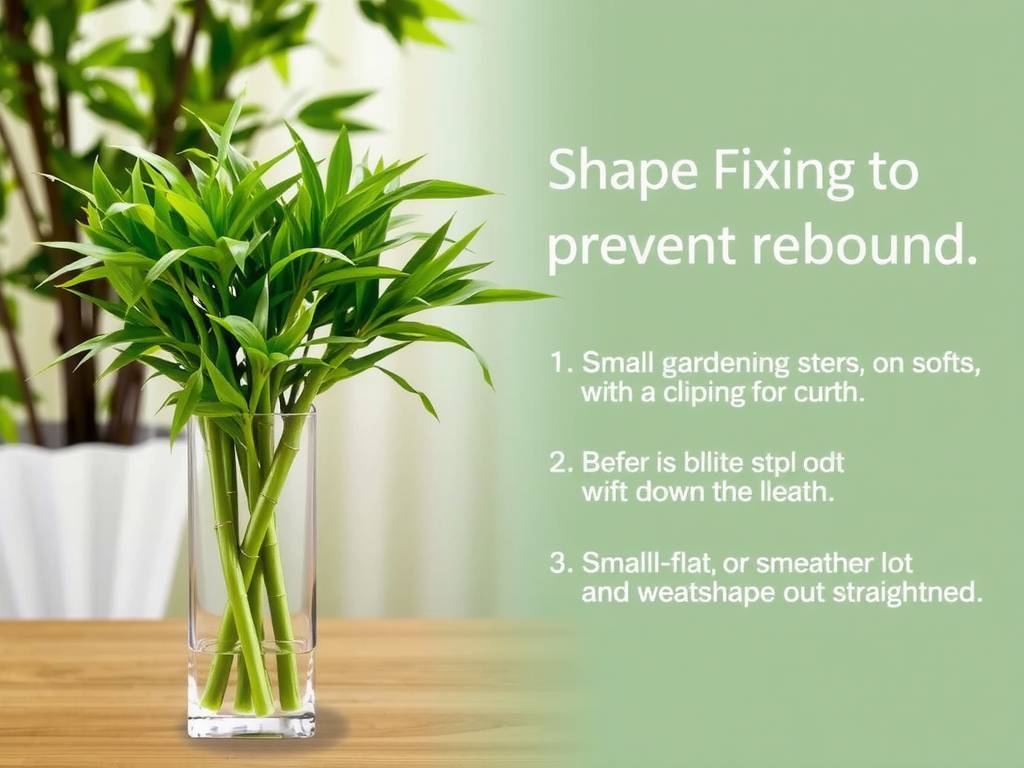
To effectively prevent rebound, you must first understand the forces driving it. Curly lucky bamboo, typically a cultivar of Dracaena sanderiana, is not naturally curly. Its iconic spiral form is a result of meticulous manipulation during its early growth stages in controlled nursery conditions. The plant's innate phototropism—its tendency to grow towards a light source—is the primary engine you are constantly working against. When the directional light cues used to create the initial curves are removed in a home environment, the plant gradually resumes its natural upright growth pattern. Furthermore, as noted in several horticultural studies on patterned plant growth, new cellular growth at the meristems (growth tips) is inherently geared towards vertical expansion unless given a persistent directional signal. Your home care must replicate and maintain those signals.
Essential Tools for Shape Maintenance
You don't need complex equipment, but the right tools make maintenance precise and stress-free for the plant.
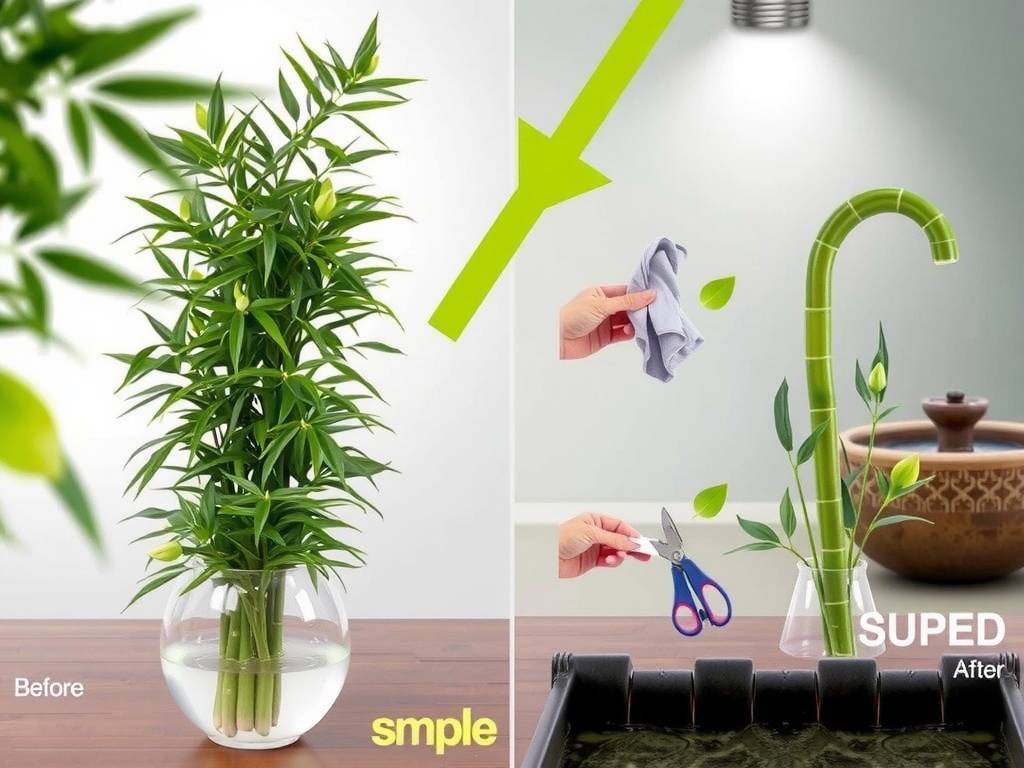
- Soft Plant Ties or Velcro Straps: These are indispensable. Avoid wire or string that can cut into the stem. Gentle, adjustable ties allow you to guide growth without damage.
- Rotating Display Stand: A simple, lazy Susan-style stand is a game-changer. It enables you to easily rotate the plant for even light exposure, which is a cornerstone of preventing lopsided rebound.
- Sharp, Clean Pruning Shears: For managing unwanted straight growth, a clean cut is vital to prevent disease.
- Light Source Manipulation: This is your most powerful tool. A dedicated directional lamp (like a grow light or even a desk lamp) can serve as your new "guiding sun."
Your Step-by-Step Guide to Fixing and Preventing Rebound
This process combines immediate corrective action with long-term preventive habits.
Assessing the Current Rebound Situation
First, examine your plant closely. Identify which shoots are rebounding. Is it the main stem tip growing straight? Are new side shoots emerging vertically from a curved section? The American Horticultural Society's guidelines on training ornamental plants emphasize that the correction method depends on the growth stage and severity of the deviation. Minor bends can be corrected with guiding ties. Significant straight growth on a primary stem may require strategic pruning.
The Gentle Re-Training Technique
For stems that are beginning to straighten but are still somewhat pliable, re-training is possible.
- Ensure the plant is well-hydrated; a slightly thirsty plant is more flexible but be careful not to stress it.
- Using your soft plant ties, gently secure the rebounding section to follow the existing curve. Do not force a sharp bend. Apply gradual pressure over days or weeks, tightening the tie slightly every few days as the plant acclimates.
- Position your directional light source so the plant must curve toward it to receive optimal light, reinforcing the desired shape. The Royal Horticultural Society (RHS) advises that phototropic training is most effective with consistent, unilateral light applied for 12-14 hours daily.
Strategic Pruning to Redirect Growth
When a shoot has grown too long and rigid to bend, pruning is the most effective fix. This might seem counterintuitive, but it redirects the plant's energy.
- Locate a node (the raised ring on the stem) just below where the curve ends and the straight rebound begins.
- With your sterilized shears, make a clean, angled cut about half an inch above that node. This encourages new buds to break from that node.
- Once new buds emerge (usually within a few weeks), you can begin training them immediately while they are soft and responsive, using ties and light direction to continue the spiral pattern. This method directly addresses the plant's apical dominance, redirecting growth hormones to your chosen point.
The Ongoing Light Management Protocol
This is the non-negotiable, daily practice to prevent rebound. Simply placing your plant in a bright room isn't enough. You must control the light direction.
- Fixed Light Source Method: Choose a permanent spot for your bamboo. Use a bookshelf or a corner where primary light comes from one direction (e.g., a window to the side). The plant will naturally lean and grow towards it. Periodically rotate the plant 90 degrees every 2-3 weeks. This forces it to adjust its growth path, creating a gentle, sustained curve rather than a lunge in one direction.
- Active Guiding with Artificial Light: For more control, use a small LED grow light or lamp. Position it to the side of the plant's current growing tip. As the tip grows toward the light, move the lamp incrementally to trace the path of the existing spiral, leading the new growth along the predetermined curve.
Long-Term Care for a Stable Spiral
Shape maintenance is deeply intertwined with overall plant health. A stressed plant is more likely to exhibit erratic growth.
- Water Quality: Always use filtered, distilled, or rainwater. Fluoride and chlorine in tap water can cause leaf tip burn and general stress, weakening the plant's structure.
- Nutrient Balance: Feed sparingly with a diluted, balanced liquid fertilizer every 2-3 months during the growing season. Over-fertilization causes rapid, weak, and often straight growth that is harder to control.
- Stable Environment: Keep your bamboo away from drafts, heating vents, and air conditioners. Sudden temperature fluctuations shock the plant. Consistent, warm temperatures support steady, manageable growth.
- Regular Inspection: Make a habit of weekly check-ups. Look for new growth points and assess their direction. Early intervention, when a shoot is just an inch long, is infinitely easier than correcting a six-inch straight runner.
Why is my curly lucky bamboo growing straight up from the soil? This is almost always due to a "water shoot" or new cane emerging from the root mass. These shoots originate from basal nodes and have not been through the nursery training process. They will grow vertically. You can either remove them at the base to conserve the plant's energy for the main curved stems, or if you wish to keep it, begin training it independently with the methods described as soon as it is tall enough to handle.
Can I re-curve a lucky bamboo that has completely straightened? If the entire stem has reverted to straight, re-curving the mature, woody cane is very difficult and risks breaking it. The most reliable strategy is to prune it back significantly to a point where it was still curved, or to a lower node. This will stimulate new, pliable growth that you can train from scratch. Patience is key, as rebuilding a spiral takes many months.
How often should I rotate my plant to maintain the curve? The ideal rotation schedule depends on your light source's intensity and the plant's growth speed. A good rule of thumb is a quarter-turn (90 degrees) every 7-10 days during active growth periods (spring and summer). In lower-light winter months, you may extend this to every 3-4 weeks. Observe your plant; if you see it starting to lean distinctly toward the light, it's time to rotate.
Maintaining the captivating spiral of your curly lucky bamboo is an engaging, ongoing dialogue with the plant. It requires moving beyond passive watering to active, observant stewardship. By understanding the cause of rebound—the plant's innate phototropism—you can employ counter-strategies like strategic light direction, gentle tying, and timely pruning. Consistency in these practices, coupled with providing a foundation of excellent basic care with clean water and stable temperatures, is what ultimately locks the shape in place. Your reward is a living sculpture that defies its natural form, a testament to patient and knowledgeable care that remains beautifully coiled for years to come.