bluename
 How to Care for Large Pothos - Prune to Promote Branches & Full Shape
You've nurtured your pothos from a humble starter plant into a sprawling, leafy giant. But now, instead of the bushy, full shape you envisioned, you're faced with long, leggy vines with sparse leaves, a plant that's outgrowing its space, or a tangled mess that's lost its lush appeal. This is the common challenge of caring for a large pothos. Without proper guidance, its vigorous growth can become unwieldy. The secret to transforming it lies not in less care, but in strategic intervention. The single most effective technique for managing size and encouraging a denser, more attractive plant is learning how to prune a large pothos. Mastering this skill is the key to promoting new branches and achieving that coveted full, bushy shape every indoor gardener desires.
Understanding the "Why" Behind Pruning Pothos
Pruning isn't just about cutting back an overgrown plant; it's a deliberate horticultural practice that directs the plant's energy. Pothos, scientifically known as Epipremnum aureum, have a dominant growing point at the tip of each vine, called the apical meristem. This tip produces a hormone called auxin that suppresses the growth of buds further down the stem. When you prune or pinch off this tip, you remove the primary source of auxin. This signals the plant to redirect its energy to the dormant nodes along the stem—those small brown bumps where leaves emerge. These nodes will then activate, producing new stems and leaves, effectively creating more branches on your pothos. Regular pruning transforms a single, long runner into multiple branching points, resulting in a fuller, more compact plant. As noted by the American Horticultural Society (AHS), "Judicious pruning of vining plants like pothos encourages lateral growth, improves plant structure, and rejuvenates older specimens, leading to improved overall plant health and aesthetics."
Essential Tools and Preparation for Healthy Pruning
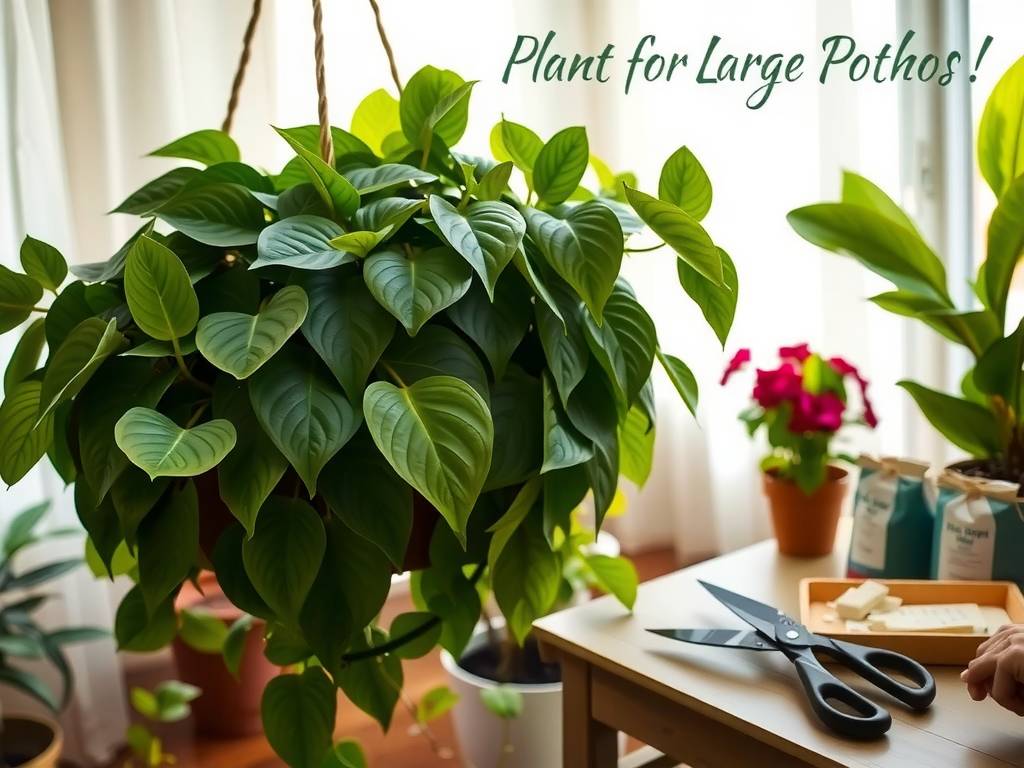
Before you make the first cut, gathering the right tools is crucial for the health of your plant. Always use clean, sharp tools. Blunt instruments can crush stems, creating ragged wounds that are more susceptible to disease. You have two excellent options:
- Sharp, clean scissors: Ideal for thinner stems.
- Pruning shears: Provide more leverage and a cleaner cut on thicker, woodier vines. Sterilize your tools before and after use by wiping the blades with rubbing alcohol or a diluted bleach solution. This simple step prevents the spread of bacteria or pests between plants, a fundamental practice in integrated pest management. Also, ensure your pothos is well-hydrated a day or two before pruning; a stressed, underwatered plant may not respond as vigorously.
Your Step-by-Step Guide to Pruning for a Bushier Pothos
Follow this clear, step-by-step process to confidently prune your large pothos and encourage a lush, branched appearance.

Assess Your Plant's Structure Begin by stepping back and looking at the overall plant. Identify the longest, leafless, or sparsest vines. These are your primary candidates for a major cutback. Also, look for any yellowing, damaged, or diseased leaves that should be removed regardless. Visualize the shape you want—whether it's a balanced, rounded form or a controlled cascade.
Making the Strategic Cuts to Encourage Branching This is the core action for promoting a full pothos shape. Locate a node on the vine you wish to trim. Using your sterilized tool, make a clean cut *about 1/4 to 1/2 inch above the node. You can cut the vine back severely, even to just a few inches from the soil, if the stem is bare. Don't be afraid; pothos are exceptionally resilient. Each node below your cut has the potential to sprout one or two new vines. For a less drastic approach, simply pinching off the very tip of a growing vine will achieve the same branching effect on a smaller scale.
What to Do With Your Cuttings: Propagate for Extra Fullness Don't throw those beautiful cuttings away! They are the perfect material to create new plants that can be added back into the mother pot for instant density. Take a cutting with at least 2-3 nodes and remove the leaf from the bottom node. Place this node in water or moist potting mix. Within weeks, roots will develop. Once the roots are a few inches long, you can plant these new pothos babies directly into the same pot. This is the fastest way to achieve a fuller pothos plant at the base, creating a thick, multi-stemmed appearance.
Post-Pruning Care for Optimal Recovery and Growth
Your plant has just received a "haircut," and now it needs support to push out that new growth.
- Light: Place your pothos in bright, indirect light. This provides the energy needed for the activated nodes to develop into strong new branches. Avoid direct, harsh sun which can scorch leaves.
- Watering: Maintain a consistent watering routine, allowing the top inch of soil to dry out between waterings. Overwatering a freshly pruned plant can lead to root rot, as its water uptake may be temporarily reduced.
- Fertilizing: About 4-6 weeks after pruning, consider a light feeding with a balanced, water-soluble fertilizer (like a 10-10-10 formula) diluted to half strength. This gives the plant a nutrient boost to support its new growth spurt. The Royal Horticultural Society (RHS) advises, "Feed foliage plants sparingly during active growth periods to support new leaf production without forcing weak, leggy growth."
Advanced Tips for Training and Maintaining Shape
Pruning is half the battle; training guides the results. Use clear plant pins or soft ties to gently direct new growth back into the soil or around a moss pole. When new vines touch soil, their nodes can root, creating an even sturdier, self-anchoring plant. For a truly spectacular specimen, insert a moss pole or trellis into the pot and attach the vines. As the pothos climbs, its leaves often grow larger, and the vertical growth saves space while showcasing the plant's beauty. Regularly rotate your pot to ensure even light exposure, preventing the plant from leaning and growing lopsided.
Troubleshooting Common Post-Pruning Issues
- No New Growth? Be patient. Growth can take several weeks to initiate. Ensure the plant has adequate light and warmth. Re-check that you are not overwatering.
- Yellowing Leaves After Pruning? A few older leaves yellowing is normal as the plant reallocates resources. Widespread yellowing could indicate overwatering or shock from being pruned too severely while under stress.
- Cut Ends Turning Brown/Black? This is a normal callousing process. If the discoloration travels down the stem past the next node, it could signify rot; re-cut the stem slightly higher with a sterilized tool.
How often should I prune my large pothos? There's no fixed calendar schedule. Prune as needed to control size and shape, typically once or twice during the active growing seasons (spring and summer). Regular tip-pinching can be done anytime you notice a vine getting too long.
Can I prune a pothos that has lost many leaves at the base? Absolutely. This is a perfect candidate for rejuvenation pruning. Cut the long, bare vines back to within a few inches of the soil. With good care, new growth should emerge from the base and remaining nodes, completely revitalizing the plant.
Is it better to prune in water or soil? Always prune a plant that is rooted in soil. While you can trim roots on a plant growing in water, the advice for shaping and branching applies to the established plant in its primary growing medium. Cuttings can then be propagated in water.
Caring for a large pothos is an ongoing dialogue with a living, growing being. Pruning is not an act of limitation, but one of encouragement and direction. By understanding how to strategically remove growth above a node, you directly stimulate the plant to become denser and more branched. Combining this practice with propagating your cuttings and providing consistent post-prune care allows you to take complete control of your pothos's form. You can transform a leggy specimen into a voluminous, sculptural centerpiece that brings life and vibrant greenery to your space for years to come. Embrace the shears—your pothos will thank you with lush, abundant growth.